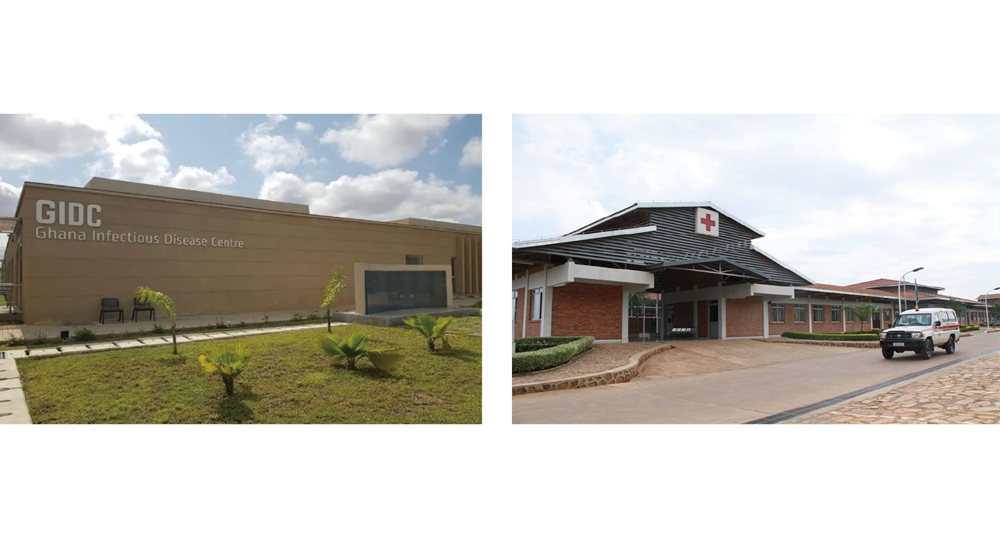
(From left) Ghana Infectious Disease Centre, Masaka Regional Referral Hospital in Uganda | Photo provided by Institut Pasteur Korea
Institut Pasteur Korea (IPK), led by Director Dr. Sung Key Jang, recently announced that it has signed a Memorandum of Understanding (MOU) with the Ghana Infectious Disease Centre and Masaka Regional Referral Hospital in Uganda to expand research collaboration and the collection of high-risk pathogens and specimen resources.
The Global Infectious Disease Specimen Biobank at IPK has been designated as a specialized biobank for new and emerging pathogens and authorized to operate for infectious disease specimens. It is the first non-medical institution to collect and distribute pathogens and specimens simultaneously, enabling the collection of infectious disease pathogens and patient specimens, including those for dengue fever, COVID-19, AIDS, tuberculosis, and measles, from African medical institutions.
Through these agreements with major overseas medical institutions, IPK aims to proactively secure resources for new and emerging infectious and high-risk diseases that could enter Korea. These resources will be made available to domestic researchers and industries. Additionally, IPK plans to promote research collaboration, including academic exchanges and joint symposiums related to multi-drug-resistant bacteria, tuberculosis, and zoonotic diseases.
In 2022, IPK also worked with the National Blood Transfusion Service of Ivory Coast to secure resources such as HIV-positive antibodies and continues its efforts toward sustained international cooperation.
The Ghana Infectious Disease Centre, established in 2020, continues strengthening its capacity to manage infectious diseases and respond to the COVID-19 pandemic. The Masaka Regional Referral Hospital, founded in 1927, provides local communities with comprehensive healthcare services, including patient referral and specialized diagnostics.
Dr. Sung Key Jang, Director of Institut Pasteur Korea, stated, “The collection and utilization of biological resources are crucial in preparing for the emergence of new and re-emerging infectious diseases. By strengthening our resource collection, management, and distribution through our international network, we will support basic and applied research to develop diagnostics, vaccines, and treatments.”
Pangyo Techno Valley is a global integrated R&D hub focused on IT, BT, CT, and NT, integrating Research (R), People (P), Information (I), and Trade (T). As Gyeonggi-do’s representative innovation cluster, Pangyo Techno Valley was established to secure national new growth drivers such as technological innovation, human resource development, job creation, and enhancing international business competitiveness. As of 2023, 1,666 companies employ 78,751 people, and it has positioned itself as the most innovative hub in South Korea, with sales amounting to 167.7 trillion KRW (125.5 billion USD).
Furthermore, the Techno Valley Innovation Division of the Gyeonggi-do Business & Science Accelerator (GBSA) holds monthly events such as the Pangyo Evening Meet-Up, Pan-Pan Day, and the Pangyo Startup Investment Exchange “In-Best Pangyo” to maximize the value of Pangyo Techno Valley. They also support the Pangyo Overseas Promotion Program to publicize information about Pangyo’s companies, products, and services to domestic and foreign investors and the media, thereby facilitating foreign investment.